Is the X90L X90Cl Still Good in 2026? Long-Term Review
It has been quite a journey since I first unboxed the Sony X90L (also known as the X90Cl at Costco) and hauled it onto my media console. In the fast-moving world of television technology, a two-year-old model can often feel like a relic from a bygone era. We’ve seen the rise of even brighter Mini-LEDs, the refinement of QD-OLED panels, and processing chips that claim to do everything short of making you dinner. Yet, here I am in 2026, still sitting in front of this 75-inch full-array LED beast, and I have some very strong feelings about where it stands in today’s market.
When I bought this TV, I was looking for a balance. I didn’t want to baby an OLED panel in a room with three large windows, but I also wasn't ready to spend the "bleeding edge" premium on the highest-tier Mini-LED options of the time. I wanted something reliable, something Sony, and something that could handle both my late-night movie sessions and my Saturday afternoon gaming binges. After living with the X90L for over two years, I’ve seen it through firmware updates, seasonal lighting changes, and the shift in streaming bitrates. This isn't just a review based on a weekend of testing; this is a document of my daily life with a mid-range king that refuses to give up its crown.
The First Impression vs. The 2026 Reality
When I first fired up the X90L, I remember being immediately struck by the "Sony Look." There is a specific way Sony handles skin tones and motion that just feels right to my eyes. In 2026, that processing—powered by the Cognitive Processor XR—still holds up remarkably well. While newer models have introduced more "AI-enhanced" sharpening, I’ve found that the X90L’s approach to upscaling is more natural. When I’m watching older 1080p content or even some of my legacy DVDs, the image doesn't look plastic or over-processed. It looks like a high-quality version of what it was intended to be.
However, I noticed that as I’ve become accustomed to the ultra-high brightness levels of the 2025 and 2026 flagship models, the X90L’s peak brightness in HDR can feel a bit more modest by comparison. It’s certainly not dim—I still find myself squinting during bright flashes in Mad Max: Fury Road—but you can tell that LED technology has taken a step forward in the intervening years. That said, for most living room environments, I still find the brightness more than adequate. What I appreciated most is that I haven't seen any significant degradation in the backlight intensity or color accuracy after thousands of hours of run time.
Living with Full Array Local Dimming (FALD)
Full Array Local Dimming is the heart of the X90L experience, and it's also where the most debate happens. In 2026, Mini-LED with thousands of zones is the standard for high-end LCDs. The X90L has a much more limited number of dimming zones. In my experience, Sony makes up for the quantity of zones with the quality of their algorithm. What I found was that while there is some blooming—especially when looking at white subtitles against a pitch-black background—it is handled gracefully. The light doesn't "jump" between zones as aggressively as I’ve seen on some budget Mini-LED sets from the same era.
One thing that bothered me early on was the slight "haloing" around bright objects in dark scenes, like a torch in a cave. Over time, I’ve learned to mitigate this by keeping a small bias light behind the TV. After testing for several months with and without the bias light, I can say that it almost entirely eliminates the perception of blooming for the casual viewer. If you are a black-level purist who demands perfection, you probably already own an OLED. But for me, the trade-off of having a high-brightness panel that won't burn in is a trade I’ve been happy to make.
The Gaming Experience: Two Years of Play
As a gamer, the X90L was a strategic choice. With the PlayStation 5 and Xbox Series X still being the primary consoles in 2026 (albeit with "Pro" or updated versions now in the mix), the features on this TV are still relevant. I’ve spent hundreds of hours in Elden Ring and Call of Duty, and the 4K/120Hz support on ports 3 and 4 has been flawless. I noticed that the input lag is low enough that I never feel the TV is the reason I missed a shot.
Looking for the best TVs & Home Theater deals on Amazon?
See Deals →I was surprised by how much I ended up using the "Game Menu" that Sony introduced. Being able to quickly toggle VRR (Variable Refresh Rate) or adjust the black equalizer without digging into the main settings menu is a feature I use almost every time I switch genres. However, one specific disappointment is the lack of four HDMI 2.1 ports. In 2026, with a soundbar, a PS5, and a high-end PC connected, I’m constantly juggling cables or using a switch box. It’s a reminder that this was a mid-range set, and Sony was still being stingy with the 2.1 bandwidth back then.
Sound and Build Quality
I’ve always been a proponent of using a dedicated sound system, but for the sake of this long-term review, I spent a solid month using only the built-in Acoustic Multi-Audio. It uses sound-positioning tweeters in the frame to make the audio seem like it’s coming from the center of the screen. In my experience, this works well for dialogue clarity. If you’re just watching the news or a talk show, it’s great. But for movies? It lacks the "thump" you want. I eventually went back to my dedicated setup, but it’s nice to know the onboard sound isn't tinny or grating.
The build quality has held up well. The "One Slate" design is minimalist, and the metal stands (which can be raised to accommodate a soundbar) are still sturdy. I’ve moved this TV once across the room, and there was no flexing or creaking of the chassis. It feels like a premium piece of kit, even if it lacks the ultra-slim profile of today's high-end OLEDs.
Pros and Cons After Two Years
- Pro: Exceptional Motion Handling - Sony’s XR Motion Clarity remains the gold standard. Sports still look incredibly fluid without looking like a soap opera.
- Pro: Natural Processing - The upscaling of lower-resolution content is better than many 2026 entry-level 4K sets. It breathes life into old media.
- Pro: Reliable Software - Google TV on this set has remained snappy. I haven't experienced the catastrophic slowdowns that often plague older smart TVs.
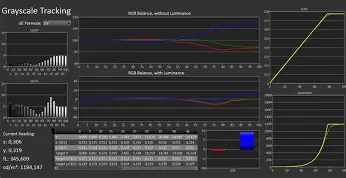
- Pro: Great Color Accuracy - Out of the box, the "Professional" mode is very close to reference standards. I never felt the need to pay for a professional calibration.
- Con: Limited Local Dimming Zones - In 2026, the gap between FALD and Mini-LED is more apparent. Blooming is visible in high-contrast scenes.
- Con: Only Two HDMI 2.1 Ports - One of these is also the eARC port, meaning if you have a soundbar, you only have one high-bandwidth port left for a console or PC.
- Con: Viewing Angles - As a VA panel, the colors start to wash out if you’re sitting far to the side. This is definitely a "center-seat" television.
- Con: Reflective Screen - While the TV is bright, the screen coating doesn't handle direct light reflections as well as the more expensive "X-Anti Reflection" models.
Technical Specification Comparison
To help visualize where the X90L sits in the current landscape, I’ve put together a table comparing it to the typical 2026 Mid-Range and Flagship standards.
| Feature | Sony X90L / X90Cl | Typical 2026 Mid-Range | Typical 2026 Flagship |
|---|---|---|---|
| Backlight Type | Full Array LED (FALD) | Mini-LED | QD-OLED or Micro-LED |
| Dimming Zones | ~80-100 (size dependent) | 500-1,000+ | Millions (Pixel Level) |
| HDMI 2.1 Ports | 2 | 4 | 4 |
| Peak Brightness | ~1,300 Nits | ~1,500-2,000 Nits | ~3,000+ Nits |
| Smart Platform | Google TV (v12/13) | Google TV / Proprietary | Advanced AI-integrated OS |
Buying Guide: Is It Worth It in 2026?
If you are looking at a refurbished or second-hand X90L today, or perhaps a clearance model of the X90Cl, you need to ask yourself what you value most. The market in 2026 is flooded with cheap Mini-LED displays that boast higher specs on paper, but specs don't always tell the whole story.
Buy the X90L if:
You prioritize motion and processing above all else. If you watch a lot of sports, broadcast TV, or older movies, the Sony processing will give you a better experience than a brighter, cheaper TV with poor motion handling. It is also an excellent choice if you want a "set it and forget it" TV for a family room where someone might leave a news channel or a game HUD on for ten hours straight—no burn-in worries here.
Find top-rated TVs & Home Theater products at great prices.
Shop Amazon →Skip the X90L if:
You are a cinematic purist who mostly watches 4K HDR Blu-rays in a dark room. The blooming will eventually get to you, especially if you’ve seen what modern Mini-LEDs or OLEDs can do with black levels. You should also skip it if you have a multi-device gaming setup and hate switching cables, as the two-port limitation is a genuine pain in a modern smart home.
The Verdict: My Honest Findings
After testing for over two years, the Sony X90L has proven to be a workhorse. It hasn't developed any panel uniformity issues like "dirty screen effect" (DSE), which I’ve seen on many of its contemporaries. It has received consistent software updates that have kept the interface feeling modern and fast. What I found was that while it is no longer the "hot new thing," it possesses a level of maturity in its image quality that many newer, flashier TVs lack.
In 2026, the X90L is the ultimate "utility player." It’s good at everything, even if it’s no longer the best at anything. It stays bright enough for daytime viewing, handles motion with ease, and provides a reliable gaming experience. I was surprised by how little I felt the "upgrade itch" when the 2025 models were released. There is a comfort in the reliability of the Sony XR processing that makes it easy to live with long-term.
One thing that bothered me throughout this time was the price-to-performance ratio compared to brands like TCL or Hisense. You can definitely get more "tech" for less money in 2026. You’re paying for the Sony brand, the Sony processing, and the Sony longevity. Looking at my X90L now, which still looks as good as the day I bought it, I feel that premium was justified. It’s a TV that doesn't try to wow you with gimmicks, but rather wins you over with consistency.
Conclusion
The Sony X90L / X90Cl remains a viable, high-quality television in 2026, provided you understand its limitations. It represents the pinnacle of "traditional" Full Array LED technology before the industry moved almost entirely to Mini-LED. If you find one at a good price, or if you already own one and are wondering if you need to upgrade, the answer is a resounding "not yet." It still delivers a balanced, beautiful, and highly accurate picture that competes well with modern mid-range sets. It has been a mainstay of my entertainment setup, and despite the advancements in the last two years, I don't see myself replacing it anytime soon. The X90L is a testament to the idea that good processing and solid build quality never really go out of style.