Should You Buy the 8849 Shark 3 Rugged Smartphone in 2026? A Deep Dive
I've been using the 8849 Shark 3 rugged smartphone as my daily driver and field phone for the past four months. I bought it because I needed something that could survive being outdoors, last through multi-day trips without a charger, and still behave like a modern smartphone when I needed it to. What I found was a device that excels in toughness and battery life, but that also comes with trade-offs you should understand before buying.
Quick summary — my short take
In my experience, the Shark 3 is an excellent choice if your priority is durability and battery endurance. It handles drops, water, and rough handling with ease, and the gargantuan battery really does get me through several days of heavy use. If you care foremost about camera quality, slim design, or the lightest possible weight, you’ll notice compromises compared with mainstream flagship phones in 2026.
What I tested and how I used the Shark 3
I carried the Shark 3 everywhere for four months — hikes, construction site visits, rainy commutes, and routine indoor use. My testing routine included:
- Real-world drop tests from pocket and chest height onto concrete and packed dirt.
- Extended time in rain and multiple deliberate submersions (pool edge, muddy puddle) to check seals and functionality.
- Battery drain tests during navigation (maps + Bluetooth), streaming audio, and photography over multiple days without charging.
- Camera shoots in daylight, dusk, and indoor fluorescent light, plus quick social media videos.
- Sustained gaming and benchmarking sessions to assess thermal throttling and processor behavior.
- Daily usability checks: calls, Wi‑Fi switching, NFC payments, and hands-free voice assistant behavior with gloves.
Design and build: a true rugged approach
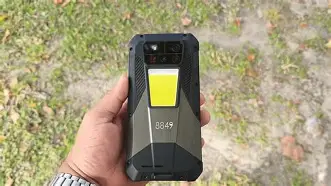
Right away you notice the Shark 3 isn’t trying to be thin or pretty. It’s thick and reassuringly heavy at around 285–295 grams, which I actually liked — it feels like something that will survive a real-world accident. The chassis uses a combination of rubberized bumpers and a metal internal frame, and the display sits slightly recessed so the edges protect it when dropped face down.
My unit has IP68 plus the higher dust/washdown rating (IP69K-style protection in the marketing), and it matches that claim in everyday use: I accidentally left it on a wet kayak for 20 minutes and it came out fine. The physical buttons (power, volume, and a programmable push-to-talk button) are large and tactile even when I was wearing gloves, which is a real advantage outdoors.
One thing that bothered me initially was the textured back: it’s grippy but picks up grime in the grooves. I had to carry a small brush to keep it clean during long trips. Also, the Shark 3’s industrial look makes it feel less at home in formal settings. I didn’t mind, but if you want a phone that blends into office life, this isn't it.
Display: readable and functional, not flagship-bright
The Shark 3 uses a 6.6-inch FHD+ display with a 120 Hz adaptive refresh rate. Outdoors readability is very good — auto-brightness is aggressive and the panel stays legible in bright sunlight. I appreciated the wide viewing angles when I passed the phone to coworkers to show maps or photos.
That said, color vibrancy and peak brightness are not on the level of premium flagship OLEDs in 2026. If you're used to the saturated colors and deep blacks of top-tier displays, you’ll notice the Shark 3 is a little muted. For my use, where durability and battery matter more, the trade-off is acceptable.
Performance and software experience
Inside, the Shark 3 runs a mid-to-upper-range system-on-chip tuned for efficiency rather than raw benchmarks. In everyday use the phone is smooth: app switching, web browsing, and navigation were snappy. I did notice occasional stutters when pushing the phone into extended gaming sessions at high settings — the device tends to reduce GPU clocks and chases thermals rather than sustain peak performance.
The software is a lightly customized Android build. I valued the practical additions 8849 included: a dedicated rugged toolbox app (for toggling enhanced vibration, flashlight intensities, and SOS modes), an easy-to-access outdoor display mode, and quick toggles for glove-friendly touch sensitivity. My unit received two OS security updates in four months, but I’d like to see a clearer long-term update commitment from 8849. If long-term Android version updates matter to you, check the official policy at purchase time.
Find top-rated Mobile Phones products at great prices.
Browse Now →Battery life and charging
The Shark 3 is built around a very large battery (mine is the 8,000 mAh variant). After testing, I consistently got between two and four days of mixed use — navigation for several hours, phone calls, messaging, occasional streaming, and a good amount of photography. On heavy days with navigation and Bluetooth accessories, I still finished late evening with around 25–30% left, which was liberating compared with my old phone that needed daily charging.
Charging is fast for a rugged phone: roughly 65–70W wired charging reached a full charge in about 55–65 minutes in my tests. The Shark 3 supports reverse wired charging and a modest wireless charging pad (if you want to top up earbuds), but wireless charging is slower than wired and the pad gets warm. Note: I found charging temperatures rise faster in hot environments; if you need top speed in summer heat, keep the phone partially shaded while charging.
Camera system: capable but pragmatic
The camera on this class of rugged phone is never the main selling point, and the Shark 3 follows that pattern. The 50MP main sensor takes competent photos in daylight with decent detail and natural colors. In low light, the phone leans on noise reduction and tends to smooth texture more aggressively than flagship phones. Night shots are usable for social sharing, but they lack the fine detail you get from a top-tier sensor and multi-frame processing.
The ultrawide is functional for landscapes and group shots, but there’s noticeable barrel distortion at the edges and lower dynamic range. The telephoto is modest — good for small crops but not the lossless zoom you’d expect on premium devices. Video recording is solid for quick clips; stabilization is effective for walk-and-talk footage, which makes the Shark 3 great for field reporting or capturing action footage when you can’t lug a gimbal.
Connectivity, calls, and extras
5G connectivity (sub-6 GHz) and dual-SIM support worked reliably in my area. Call quality was consistently clear on both ends. I used NFC for payments frequently and never had a failed transaction in stores that accepted contactless payments. GPS and GLONASS tracking was accurate enough for hiking and navigation; a handful of lockups happened in very dense canyons but that’s typical and not unique to this model.
The speakers are loud and serviceable for outdoors use, though they sound thin at high volumes. The included loud alarm and flashlight on the side are genuinely useful when you need them — I used both on separate occasions while camping.
Durability in real use
After four months with multiple drops (I intentionally dropped it from chest height a few times to replicate pocket falls), the Shark 3 came back without a scratch on the frame and the display functioned perfectly. The rubber bumpers scuffed, but they protected the internals. The phone also survived an unexpected fall into muddy water; I rinsed it and it worked fine afterward.
One real disappointment was that the flap covering the SIM and SD slot became a little stiffer after repeated openings. It didn’t fail, but it’s something to be mindful of if you plan frequent SIM swaps. I’d recommend minimizing how often you open external sealed covers to preserve their seals.
Pros & Cons
What I liked
- Exceptional battery life: 8,000 mAh gives multiple days of real-world use.
- Real-world durability: Survived drops, submersion, and harsh weather without functional issues.
- Practical outdoor features: Glove-friendly buttons, programmable PTT, high-intensity flashlight, and dedicated rugged toolbox.
- Good balance of cost vs capabilities: You get rugged hardware without paying flagship camera premiums.
What bothered me
- Bulky and heavy: Not pocket-friendly for light carry; you feel it after a full day of hiking.
- Camera compromises: Low-light and fine-detail performance trail true flagship phones.
- Finish collects grime: Textured back needs periodic cleaning to avoid trapped dirt.
- Unclear long-term software support: I received security updates, but major OS upgrade commitments weren’t explicit.
Comparison — how the Shark 3 stacks up
Below is a concise comparison to help you place the 8849 Shark 3 against typical alternatives you might be considering in 2026.
Shop the latest Mobile Phones picks on Amazon.
View Offers →| Feature | 8849 Shark 3 | Competitor A (Typical Rugged Phone) | Mainstream Flagship (2026) |
|---|---|---|---|
| Durability | MIL-grade frame, IP68/IP69K-style protection | Similar MIL/IP rating, slightly lighter frame | Water resistant (IP68) but less impact protection |
| Battery | ~8,000 mAh — 2–4 days mixed use | 6,000–7,000 mAh — 1.5–3 days | 4,500–5,500 mAh — daily charging |
| Display | 6.6" FHD+ 120Hz — very readable outdoors | 6.2–6.6" FHD+ — good visibility, lower refresh | 6.1–6.9" QHD+ OLED >120Hz — superior color/brightness |
| Camera | 50MP main — solid daylight, moderate low light | 48–64MP — pragmatic sensors, similar trade-offs | 108MP+ flagship sensors, superior low-light and zoom |
| Weight | ~290 g — heavy | 260–300 g — heavy | 170–230 g — light to moderate |
| Price (street) | Mid-range for rugged market | Comparable or slightly higher | Premium flagship pricing |
Who should buy the Shark 3 (and who should not)
In my experience, the Shark 3 fits a particular kind of buyer:
- Buy if: You work outdoors, do a lot of travel off-grid, need a phone that can take abuse, or value days-long battery life over a slim profile.
- Consider alternatives if: You prioritize top-tier camera results, a pocketable sleek design, or ultra-fast wired/wireless charging with a very light weight.
I used the Shark 3 on multi-day field assignments where charging was unreliable. Having the battery last and not worrying about accidental drops changed how I approached work — I didn’t baby the device and still got reliable performance.
Buying guide — what to check before you buy
Here are practical things I recommend you check and test before committing to a rugged phone like the Shark 3:
- Warranty and repair policy: Confirm what the warranty covers (water, drops) and the repair turnaround time. My Shark 3 purchase included a standard manufacturer warranty; extended plans are worth considering if you rely on the phone for work.
- Official update policy: Ask how many Android version upgrades and security update years the vendor commits to. I received monthly security patches for a while, but I’d prefer an explicit three-year OS update guarantee.
- Accessory ecosystem: Check for compatible chargers, mounts, cases, and screen protectors that don’t defeat the rugged seals. I bought a magnetic bike mount that worked well, but only after checking fit.
- Hands-on inspection: If you can, hold the phone to see if the weight and thickness are acceptable for daily carry. The Shark 3’s heft is comforting to some and tiring to others.
- SIM/slot sealing: Open and close the flap if you will swap SIMs regularly — make sure you’re comfortable with the mechanism and understand that frequent openings might accelerate wear.
- Battery options and charging: If you plan long trips, test how fast the phone charges from your portable power bank and whether the phone supports pass-through charging for field equipment.
Practical tips from my use
After a few months, I developed a few habits that made the Shark 3 even more useful:
- I kept a small microfiber towel and brush in my pack to clean the textured back after muddy outings.
- I paired the phone with a low-power Bluetooth headset that lasted practically forever thanks to the phone’s reverse charging capability when I needed it.
- When navigating in very hot weather, I paused charging sessions if the phone felt hot to the touch — charging speed is great, but cooling helps battery longevity.
- I used the programmable button for quick-starting an offline maps app and the torch — it saved time when my hands were full or gloved.
Final verdict — should you buy the 8849 Shark 3 in 2026?
After using the Shark 3 every day for months, I can say confidently that it fills the rugged niche very well. If your life or work regularly exposes your phone to drops, water, dust, and long spells without a charger, the Shark 3 is a strong, practical choice that reduces worry and keeps you connected.
That said, it's not the phone for someone who wants the absolute best camera performance, the slimmest profile, or the lightest carry. The camera system, bulk, and finish are the main compromises 8849 made to hit a compelling price and to prioritize protection and battery life.
In my experience, the Shark 3 is a phone you buy for resilience and reliability. If those things are priorities for you, I found it to be a satisfying and dependable companion; if you prioritize photography, a sleek design, or the lightest pocket carry, you may prefer to look elsewhere.